THE TRUE-SCALE MEASUREMENT STUDIO

The perfect fit. Not a guess.

Your ring size, measured on your screen. True to life. Down to the millimetre.

Screen scale96 PPI default
Resolution±0.05 mm steps
Privacy100% on-device
StandardsUS · UK · EU · JP · IN
ANIMATED VISUAL GUIDE · HOW TO MEASURE IN 15 SECONDS
STEP 1 · CALIBRATEHold a card to screen (or pick device) Tap to open calibration
STEP 2 · PLACE & ALIGNPlace ring on circle & match INSIDE edge Tap to scroll to stage · Use slider or ← / → keys
STEP 3 · YOUR SIZERead your size on the right or save card Tap to download PNG Size Passport
Internal diameter
17.30mm
Calibration needed1:1 scale
INTERNAL EDGEALIGN INNER EDGE TO SOLID LINE17.30 mm
Keep your eye directly above the centre · drag reticle to resize
A perfect fit starts with calibration.

Match a bank card to your screen for true-to-life measurements.

Quick size presets & brand equivalents
INSTANT JUMP
Effective Ø17.30 mm
Circumference54.3 mm
Cartier ISOSize 54
Tiffany & Co.US 7

Three small steps. One confident fit.

THE METHOD
01

Calibrate your screen

Use a standard bank card to set the exact scale. It takes a moment.

02

Match the inner edge

Place your ring on the circle or drag the circle until it touches the inside.

03

Find your perfect fit

Keep your eye directly above the crosshair. Read your size on the right.

Evening check: Measure when hands are warm.
Wide bands: Add +0.25–0.5 size for 6 mm+ rings.
Zero parallax: Look straight down at the crosshair.
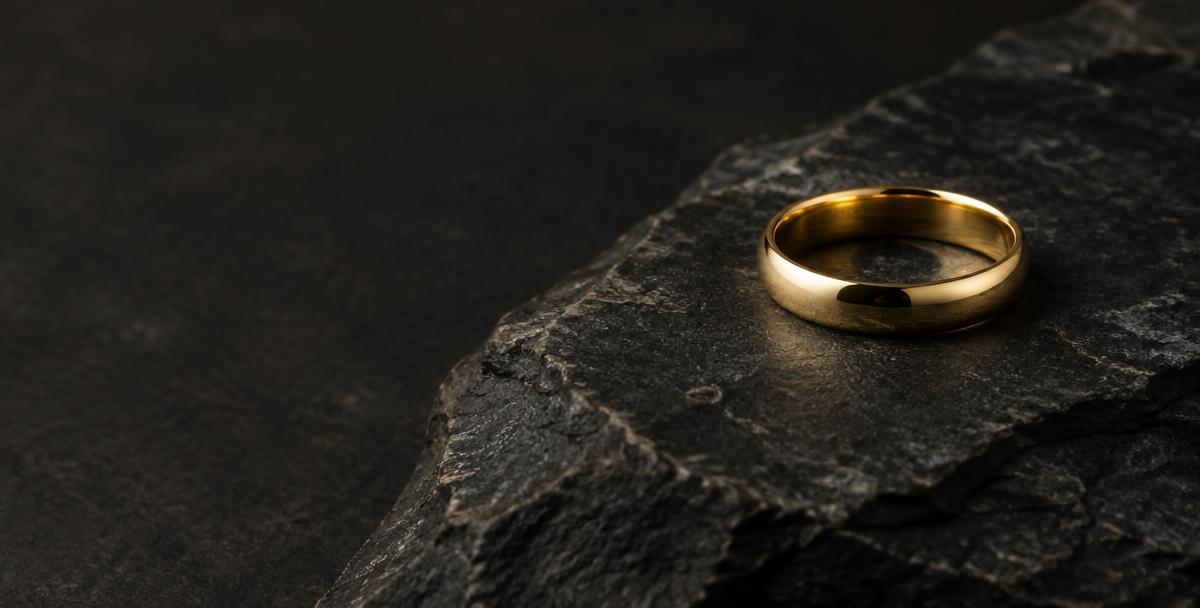
Polished gold wedding band on dark stone
MADE FOR THE MOMENT

Small detail.
Lifelong difference.

Measure with a little more care.

METROLOGY & SIZING REFERENCE GUIDE

The Metrology Behind Accurate Online Ring Sizing

How ISO 8653 internal diameter formulas, credit-card PPI calibration, and wide-band comfort adjustments eliminate guesswork.

ISO 8653 STANDARD

Internal Diameter vs. Inner Circumference

International jewellers measure rings by either internal diameter (d in mm) or inner circumference (C = π × d). A single US full size step equals exactly 0.8128 mm (0.032 inches) of inside diameter—roughly 2.55 mm of circumference. Even a 0.40 mm error shifts your ring by half a US size, which is why uncalibrated phone rulers fail.

US Size = (Diameter_mm − 11.63) ÷ 0.8128 · EU ISO = π × Diameter_mm
BAND GEOMETRY

Wide-Band Displacement & Comfort-Fit Domes

A narrow 2 mm solitaire band touches only a thin line of skin, whereas a 6 mm to 10 mm wedding band compresses soft tissue across a wider cylinder. For flat-interior bands 5 mm or wider, sizing up by +0.25 to +0.50 US size (+0.20 to +0.45 mm diameter) prevents constriction. Comfort-fit rings feature a domed interior that reduces friction over the knuckle.

6 mm Flat Band: +0.25 US · 8 mm+ Flat Band: +0.50 US · Comfort Dome: −0.10 mm offset
ANATOMICAL PRECISION

Thermal Expansion, Knuckles & Zero Parallax

Finger volume fluctuates throughout the day due to temperature, hydration, and activity—typically smallest in cold mornings and up to 0.5 size larger in warm evenings. Always measure at room temperature in the evening, view the screen straight-on from 30 cm to avoid glass parallax, and enable the +0.50 mm knuckle allowance if your knuckle is wider than your finger base.

Optimal Check: Evening · 20–22 °C Room Temp · 90° Perpendicular Sightline
FREQUENTLY ASKED QUESTIONS

Expert Answers on True-Scale Sizing & Fit

ISO 8653 · GIA · HOROLOGY STANDARDS
How accurate is an online on-screen ring sizer?

When calibrated against a standard bank or credit card (ISO/IEC 7810 ID-1, exactly 85.60 × 53.98 mm), ActualRingSize locks your display’s exact pixel density (PPI) down to ±0.05 mm steps—finer than quarter-size US increments (0.20 mm). For best accuracy, match the inner edge of the ring with your eye directly above the centre crosshair.

How do I measure my ring size without an existing ring?

Switch to the "Paper / string" tab or "Only my finger" optical calliper. Wrap a non-stretchy strip of paper snugly around the base of your finger, mark where it overlaps, and measure the length in millimetres against our calibrated on-screen ruler. If your knuckle is prominent, measure both your finger base and knuckle and choose the midpoint.

Should I size up for a wide wedding band (6 mm or 8 mm)?

Yes. Wide bands (5 mm to 12 mm) cover more surface area on the finger and displace more skin than a 2 mm engagement ring. Jewellers recommend going up 0.25 US size for 5–6.5 mm bands and 0.50 US size for 7–10 mm flat bands. Our control dock automatically computes this effective diameter adjustment.

What is the average ring size for women and men?

The most common women’s ring sizes are US 6 to US 7 (16.51 mm to 17.35 mm inside diameter, EU 52 to 54, UK L½ to N½). The most common men’s ring sizes are US 9 to US 10.5 (18.89 mm to 20.17 mm inside diameter, EU 59 to 63, UK R½ to U½).

How do US, UK, EU, Japanese, and Indian ring sizes compare?

US and Canadian sizes use a numerical scale (e.g. US 7 = 17.35 mm inside diameter). UK and Australian sizes use letters (A to Z) based on 0.40 mm diameter increments. EU/ISO, French, and Cartier sizes use inner circumference in millimetres (e.g. EU 54 = 54.4 mm circumference). Japanese, Chinese, and Indian sizes use distinct numerical scales mapped in our live converter.

Does ActualRingSize upload my camera feed, photos, or card details?

Never. Every calculation, credit-card scale calibration, camera overlay, and saved measurement runs 100% locally in your browser. Zero images, personal measurements, or card numbers ever leave your device.